

Disclaimer: This page contains content specific to Florida Stem Cell Law, which permits specific licensed physicians to administer stem cell therapies not yet approved by the U.S. Food and Drug Administration. This content applies to providers licensed in Florida under Chapter 458 (Medical Doctors) and Chapter 459 (Osteopathic Physicians) acting within the scope of their practice.
Platelet-Rich Plasma (PRP) therapy is a regenerative medical procedure that utilizes a concentrated component of a patient’s own blood to facilitate tissue repair and modulate inflammation. Since PRP is obtained directly from the individual receiving treatment, it is classified as an autologous biologic therapy. Instead of introducing foreign substances, PRP enhances the naturally occurring healing elements already present within the patient’s bloodstream.
The procedure begins with the collection of a small blood sample in a clinical setting. Subsequently, the sample undergoes controlled centrifugation to isolate and concentrate platelets and plasma proteins. These platelets contain growth factors and signaling molecules integral to tissue regeneration, angiogenesis, and cellular communication. Upon preparation, the platelet-rich concentrate is meticulously injected into the designated region to facilitate structural restoration and biological repair.
PRP therapy is not intended merely to conceal discomfort. Its objective is to positively influence the fundamental healing environment by augmenting collagen synthesis, enhancing local circulation, and regulating the inflammatory pathways that underlie chronic orthopedic and soft-tissue conditions.
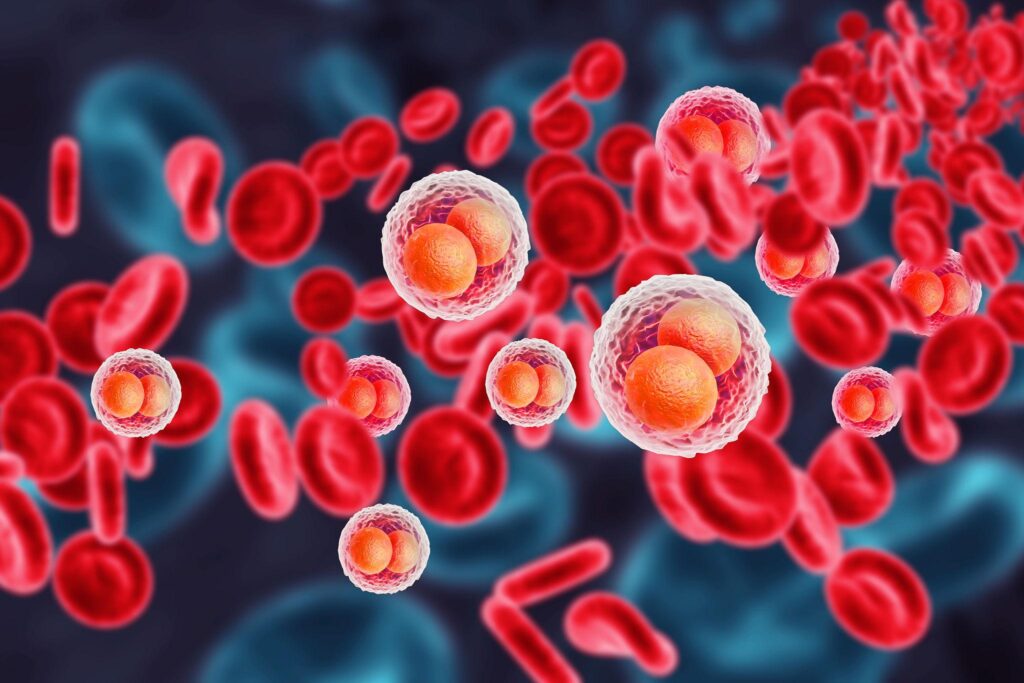
When introduced into damaged or degenerative tissue, Platelet-Rich Plasma (PRP) triggers a biological cascade through three primary stages. During the initial phase, platelets secrete essential growth factors—such as Platelet-Derived Growth Factor (PDGF), Transforming Growth Factor-beta (TGF-β), and Vascular Endothelial Growth Factor (VEGF)—which attract reparative cells and initiate a regulated inflammatory response vital for tissue healing. This phase eliminates damaged material and optimizes the environment for regeneration.
During the proliferative phase, fibroblasts and repair cells increase collagen synthesis and extracellular matrix production, thereby strengthening tendons, ligaments, and joint-supporting structures. Enhanced angiogenesis facilitates increased oxygen and nutrient delivery to the affected region. In the remodeling phase, newly synthesized collagen fibers undergo reorganization and maturation, thereby enhancing tissue stability, functional movement, and long-term structural integrity.
PRP is prepared in the office using sterile techniques. After centrifugation, the platelet-rich layer is meticulously isolated to minimize contamination from red blood cells and excessive inflammatory cells. Platelet concentration can vary depending on the preparation systems and protocols used, underscoring the importance of appropriate equipment selection and comprehensive clinician training to maintain treatment quality and consistency.
Since PRP is autologous, the risks related to allergic reactions or disease transmission are minimal when proper standards are adhered to. Some patients may experience temporary soreness, mild swelling, or localized discomfort at the injection site after treatment. These effects are generally transient and indicate the controlled inflammatory signaling essential for effective tissue repair.
Unlike stem cell therapy, PRP does not introduce cellular elements — it concentrates the patient’s own platelets and growth factors, and the therapy involves their redeployment. Conventional orthopedic treatments generally focus on managing symptoms through medications, corticosteroid injections, or modifications to activity level. In contrast, PRP therapy distinguishes itself by targeting the fundamental biological repair mechanisms, thereby supporting collagen regeneration, enhancing vascular supply, and promoting the recovery of structural tissues over time. Although individual results may vary with the severity of the condition and patient-specific factors, regenerative methodologies aim to improve tissue quality at a foundational level rather than solely mitigate pain signals.
Individuals contemplating PRP therapy should consult their physician to discuss their diagnosis, treatment history, imaging results, and realistic expectations for outcomes. The severity and duration of symptoms, along with the patient’s overall health status, are factors that influence candidacy and expected results. PRP therapy is not suitable for all conditions; therefore, a comprehensive clinical assessment is essential to determine the most appropriate treatment approach.|
Ensure your Provider utilizes a high-performance, made-in-the-USA FDA-cleared PRP system tailored for orthopedic use, with a minimum of the following:
PRP therapy has an excellent safety profile. As an autologous treatment, the risk of immunologic reaction or infection is minimal. Emphasizing specific screening protocols and safety measures can help clinicians feel more confident when selecting patients and managing risk.
PRP therapy has an excellent safety profile. As an autologous treatment, the risk of immunologic reaction or infection is minimal.
Careful screening ensures patients are appropriate candidates for PRP therapy.
PRP allows you to use a biological healing for your musculoskeletal care while supporting conservative treatment goals. Its versatility and safety make it suitable for a wide range of issues.
Strategic advantages include:
PRP allows you to harness your body’s innate healing capabilities with almost zero downside.